
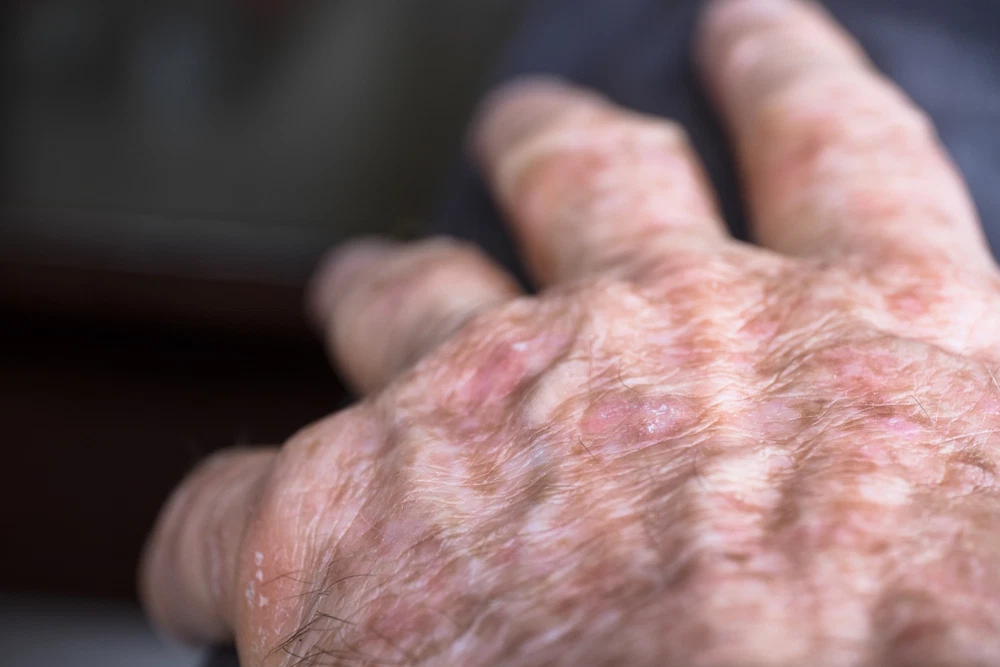
If you’ve noticed a rough, dry patch of skin that doesn’t seem to go away, especially in areas that get a lot of sun, it could be more than just dry skin. It may be a sign of actinic keratosis, a common skin condition that deserves attention.
At Dermatology West in Farr West, we regularly evaluate and treat actinic keratoses to help patients reduce their risk of more serious skin issues. While these spots might seem minor at first, they can indicate long-term sun damage and have the potential to progress if left untreated.
What Is Actinic Keratosis?
Actinic keratosis (AK) is a rough, scaly patch or spot on the skin that develops after years of sun exposure. These lesions are considered precancerous, meaning they have the potential to turn into squamous cell carcinoma: a type of skin cancer.
AKs are typically found on sun-exposed areas such as the face, scalp, ears, neck, forearms, and the backs of the hands. They’re more common in people over the age of 40, especially those with fair skin, light eyes, or a history of frequent sunburns or long-term sun exposure.
How to Recognize an Actinic Keratosis
Actinic keratoses can vary in appearance but often share these features:
- A dry, scaly, or sandpaper-like texture
- Flat or slightly raised patches
- Colors that range from skin-toned to red, pink, or brown
- Rough spots that feel more noticeable than they look
- Areas that may burn, sting, itch, or feel sensitive
Some AKs are easier to feel than see, especially on the scalp or along the hairline. They may come and go, or flake off and reappear, which can delay diagnosis if not closely monitored.
Why Is Actinic Keratosis Serious?
While actinic keratoses themselves are not cancer, they are considered a warning sign. Over time, a small percentage of these lesions can develop into squamous cell carcinoma. Unfortunately, there’s no way to predict which AKs will progress and which will not. That’s why early evaluation and treatment are so important.
Even if a spot seems minor or isn’t causing discomfort, addressing it early helps reduce risk and may prevent the need for more extensive treatment later on. It also gives your dermatology provider a chance to examine other areas of sun-damaged skin that could benefit from monitoring or preventive care.
What Causes Actinic Keratosis?
AKs are caused by long-term exposure to ultraviolet (UV) light, both from natural sunlight and artificial sources like tanning beds. The damage builds slowly over time, which is why AKs often appear later in life, even if you haven’t had a recent sunburn.
Frequent sun exposure without protection, outdoor work or hobbies, and a history of tanning all increase your risk. Even indirect exposure, such as reflected sunlight from water or snow, can contribute to UV-related skin damage.
How Actinic Keratosis Is Treated
If an actinic keratosis is identified during a skin exam, there are several treatment options available depending on the number, size, and location of the lesions.
- Cryotherapy (freezing): A quick in-office treatment where liquid nitrogen is applied to destroy the abnormal cells. The spot may blister and peel, allowing new, healthy skin to form.
- Topical medications: Prescription creams or gels can be used at home to treat multiple areas of sun-damaged skin. These treatments may cause temporary redness or irritation as the damaged cells are cleared.
- Curettage: The lesion is gently scraped away under local anesthesia, often followed by cautery to ensure complete removal.
- Photodynamic therapy: A light-based treatment that targets abnormal cells after a special topical solution is applied.
The best treatment option depends on your skin type, the number of AKs, and your overall health. In some cases, multiple treatments may be combined to improve results.
Prevention and Ongoing Care
Since actinic keratosis is caused by sun damage, protecting your skin from further UV exposure is essential:
- Use a broad-spectrum sunscreen with SPF 30 or higher every day
- Wear protective clothing, wide-brimmed hats, and sunglasses
- Avoid tanning beds and intentional sunbathing
- Stay in the shade during peak sun hours (10 AM to 4 PM)
- Examine your skin regularly for new or changing spots
Even after treatment, it’s important to have regular skin checks. People who have had one AK are more likely to develop others in the future, so continued monitoring is key.
Don’t Ignore Rough, Persistent Spots
Actinic keratosis is a sign that your skin has been through a lot of sun exposure—and it’s also a chance to catch and manage a potential problem early. With proper care, most AKs can be treated effectively and completely.
If you’ve noticed a rough patch that isn’t going away, or if you’ve had a lot of sun exposure over the years, call 801-917-6177 and schedule an appointment at Dermatology West. Tyler McKinnon, PA-C, MPAS, offers thorough skin evaluations and practical treatment options to help you stay ahead of skin cancer risk and protect your long-term skin health.