
Skin cancer screenings are one of the most important preventive steps individuals can take for their long-term health. At Dermatology West in Farr West, UT, patients frequently ask what to expect during these appointments and whether the process is uncomfortable or time-consuming. A professional skin cancer screening is a straightforward, noninvasive evaluation designed to detect suspicious lesions early, when treatment is most effective. Understanding the process can ease anxiety and encourage regular monitoring.
Why Skin Cancer Screenings Matter
Skin cancer is the most common form of cancer in the United States. Basal cell carcinoma, squamous cell carcinoma, and melanoma each present differently, but all benefit from early detection. When identified in its earliest stages, treatment is typically less invasive and outcomes are significantly improved. Regular screenings are especially important for individuals with fair skin, a history of sunburns, frequent sun exposure, a personal or family history of skin cancer, or numerous moles.
Even people without obvious risk factors can benefit from periodic checks. Skin cancer can develop in areas that are not routinely exposed to the sun, including the scalp, soles of the feet, and between the toes. Because some lesions may look subtle or resemble harmless growths, professional evaluation provides an added layer of safety. Routine monitoring also helps distinguish benign conditions such as actinic keratosis or other noncancerous growths from more serious concerns.
Preparing for Your Appointment
Preparing for a skin cancer screening is simple. Patients are typically advised to remove nail polish and avoid wearing makeup or heavy lotions so the skin can be examined clearly. Wearing loose, comfortable clothing makes it easier to change into a medical gown if a full-body examination is recommended. Bringing a list of medications and noting any new, changing, itching, or bleeding spots can help guide the conversation.
It is helpful to think about personal and family history before the visit. Previous diagnoses of skin cancer, significant sun exposure, tanning bed use, or immune system conditions should be discussed. Individuals already managing dermatologic concerns such as eczema or psoriasis should also mention these, as inflammation and skin changes may sometimes make self-monitoring more challenging.
What Happens During the Examination
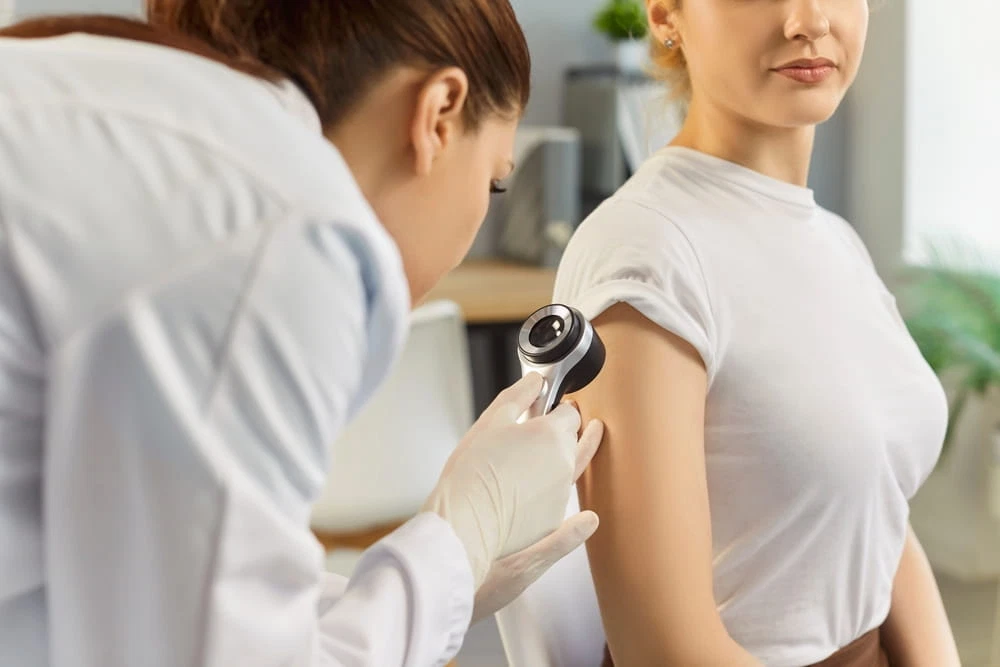
A skin cancer screening typically begins with a visual inspection of the skin from head to toe. This process may include the scalp, ears, face, neck, torso, arms, legs, hands, feet, and nails. A handheld device called a dermatoscope may be used to magnify and illuminate certain areas, allowing closer evaluation of pigment patterns and vascular structures.
During the exam, providers often follow the ABCDE guideline for evaluating moles and pigmented lesions:
- Asymmetry: One half does not match the other
- Border: Edges are irregular, scalloped, or poorly defined
- Color: Variation in color such as shades of brown, black, red, or blue
- Diameter: Larger than about 6 millimeters (though melanomas can be smaller)
- Evolving: Changes in size, shape, color, or symptoms
If a lesion appears suspicious, a biopsy may be recommended. This involves numbing the area and removing a small sample of tissue for laboratory analysis. The procedure is generally quick and performed in-office. Not all biopsies confirm cancer; many lesions turn out to be benign. However, biopsy is the only definitive way to determine whether abnormal cells are present.
After the Screening: Next Steps
If no concerning lesions are found, patients are typically advised on how often to return for follow-up screenings based on their risk level. Those with higher risk factors may benefit from annual or more frequent exams. Education on self-examinations is often provided so individuals can monitor their own skin between visits.
If skin cancer is diagnosed, treatment options vary depending on the type and stage. Early-stage basal and squamous cell carcinomas are often treated effectively with minor surgical procedures. Melanoma may require additional evaluation and management. Some precancerous lesions, such as actinic keratosis, can also be treated to reduce the likelihood of progression. Prompt evaluation and appropriate care are central to maintaining long-term skin health.
Regular skin cancer screenings play a vital role in early detection and peace of mind. By understanding what happens during the appointment, individuals can approach the process with confidence and clarity. For those seeking reliable education about preventive dermatologic care, Dermatology West in Farr West, UT provides valuable information to support informed decisions and proactive skin health management.
Resources
American Academy of Dermatology Association. (2023). Skin cancer: Screening and diagnosis. Journal of the American Academy of Dermatology.
Siegel, R. L., Miller, K. D., & Wagle, N. S. (2023). Cancer statistics, 2023. CA: A Cancer Journal for Clinicians.
Swetter, S. M., Tsao, H., & Bichakjian, C. K. (2019). Guidelines of care for the management of primary cutaneous melanoma. Journal of the American Academy of Dermatology.