Acne and rosacea are two common skin conditions that affect teens and adults. An apparent case of adult acne could actually be something deeper. Acne is caused by clogged pores from oils, dead skin cells, or makeup products. Rosacea is more often caused by inflammation and can be worsened by diet or behavior.
Determining between acne, rosacea, or another skin condition can be challenging for patients on their own. If you can’t get to a dermatologist or have to wait for your appointment, here are some ways to determine what skin condition you are experiencing, as well as how we recommend you treat it.
Determining Between Acne And Rosacea
If you want to determine what skin condition you are experiencing on your own, there are some signs that set them apart. Here is more information about acne and rosacea, including how they present on the skin and what causes them.
Inflammation
While both acne and rosacea are inflammatory conditions, their pathway of inflammation is what sets them apart. Acne inflammation is caused when the pores are triggered by bacteria or clogs. Rosacea, on the other hand, is a systemic inflammation also known as an exaggerated immune response. Multiple stressors can cause flare-ups, including stress, spicy foods, sun exposure, and more.
Appearance
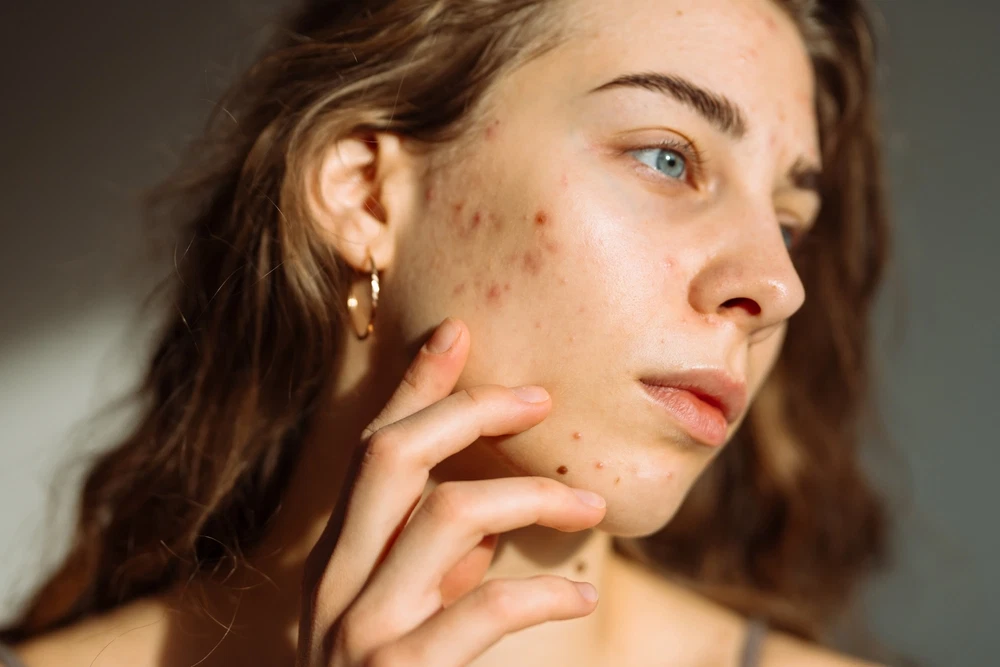
Acne presents as lesions that are often referred to as blackheads, whiteheads, and pimples. Cysts and nodules are also common with adult acne, but are less common. Your skin will look red only around the lesion rather than a rash or spreading across your skin.
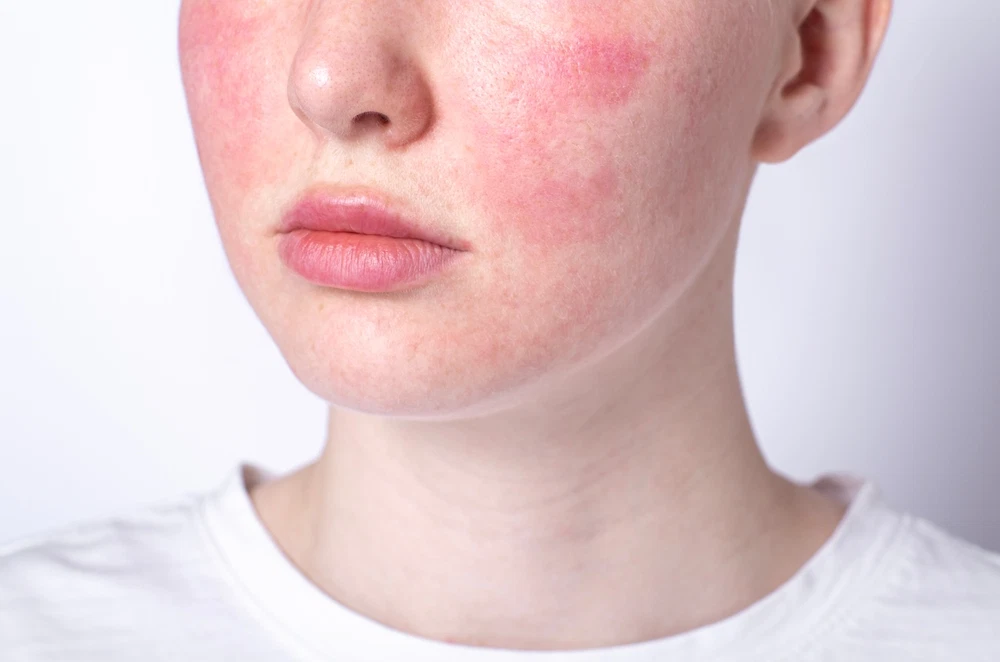
Rosacea is more of a widespread redness that resembles a rash. Separate lesions are not common with rosacea, but rather you will have dilated blood vessels underneath the skin that may make the area feel more sensitive.
Where It Appears Most
While it is possible to have breakouts and irritation all across the body, there are some common places where they appear most often. Breakouts are common along the jawline, across the T-zone (nose and forehead), chin, neck, and shoulders. Others may also experience acne in places where sweat can settle easily, including the armpits, back, and chest.
Rosacea often appears on the scalp, neck, cheeks, middle forehead, and upper back. The central face is the most common place for rosacea to flare and can also affect the eyes, causing them to appear bloodshot or swollen.
The Best Treatments For Rosacea
The right treatment for your rosacea is one customized by your dermatologist with your medical history and daily life in mind. The first step in treatment is to try medication in gel or cream form. These are topically applied to the skin to help reduce constricting blood vessels and reduce the appearance of redness. Oral antibiotics may also be prescribed to help with these same symptoms, also limiting pain and itchiness.
More intense treatments include laser treatments, which target enlarged blood vessels that cause long-term redness. However, lasers are most effective on paler skin, rather than tanned, brown, or Black skin. Repeated services are needed in order for patients to see results. Even after a treatment, you may not see results for a few weeks.
The Best Treatments For Adult Acne
It is often recommended to treat acne with topical serums and creams. While some acne can be helped with diet, exercise, and behavior changes, adult acne may not be best treated with lifestyle changes. Common types of topical treatments include azelaic acid, salicylic acid, retinoids, and dapsone. Oral medications are also common for acne treatments, especially for women. Oral contraceptives are often prescribed to women to help regulate acne that is caused by changing hormones. While this can work for many patients, it doesn’t work for everyone and comes with a list of side effects.
For extreme acne, antibiotics and oral antibiotics can be prescribed to help kill harmful bacteria or dry out very oily areas of the body. Anti-androgen agents may work for those who don’t see results from birth control pills, as they block androgen hormones that produce oil.
Skincare treatments can also be used to help reduce the spread of acne or heal the skin after breakouts. Chemical peels, light therapy, injections, or laser resurfacing can help give the skin a smoother appearance and remove harmful bacteria from the face that lead to breakouts.
Professional Help From Our Dermatologists
Looking for a quality dermatologist who can help improve your skin conditions with proper medical treatments? Dermatology West offers a variety of services for acne, rosacea, eczema, skin cancer, psoriasis, warts, and more. We strive to exceed your expectations with our customer service, services, and technology. We also accept most major insurance plans to help cover the cost of health treatments that will make you look and feel your best.
Your skin deserves the absolute best, so take action to meet with a dermatologist to get the best recommendations and results possible. Schedule online or call our office to ask any questions you may have.